


Huele a gas o tiene
¿Una emergencia?
Huele a gas o tiene
¿Una emergencia?
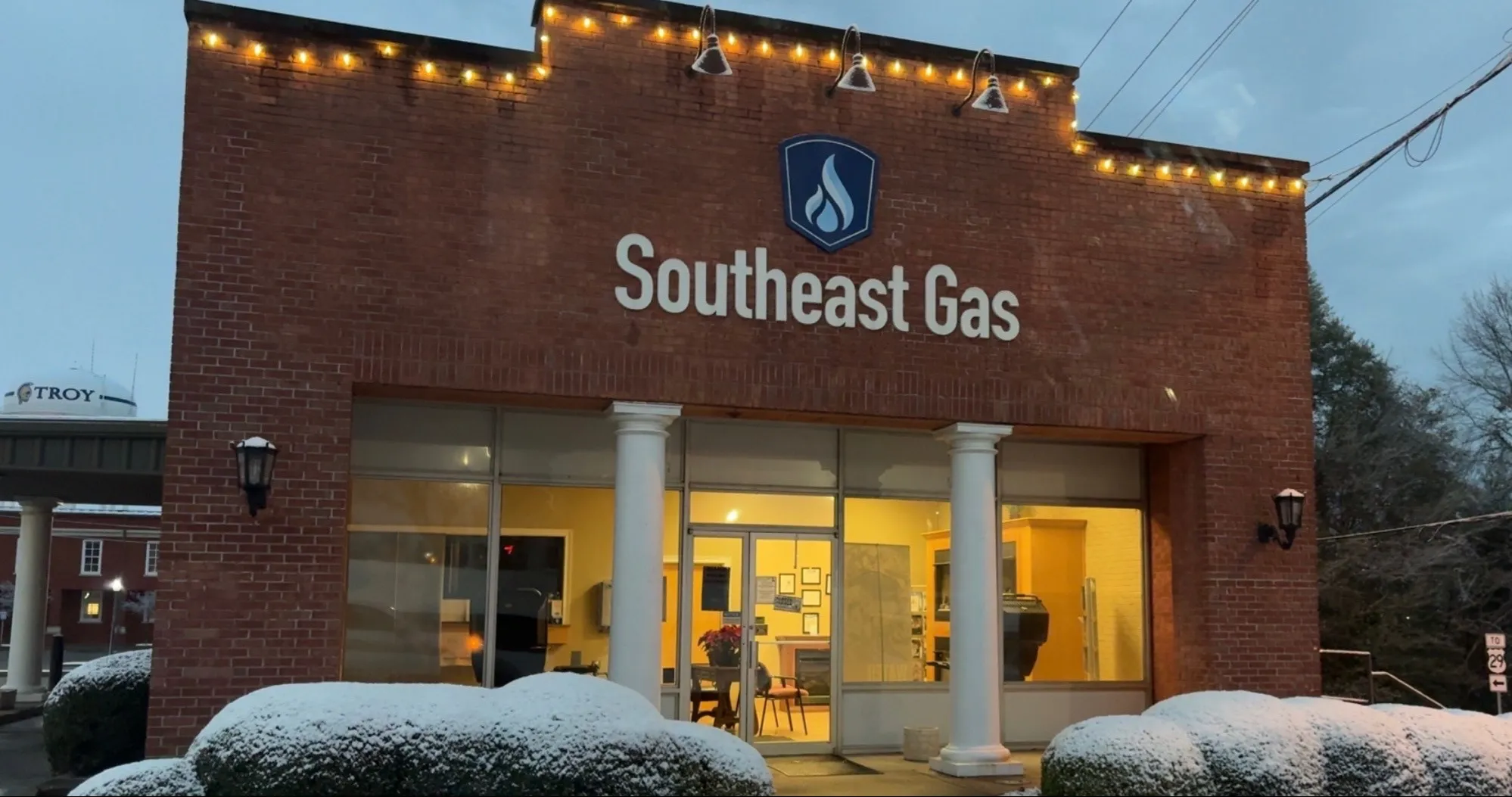
As winter settles in, many people picture a cozy evening indoors, watching their favorite movie while a fire crackles in the background. While those moments are something we look forward to each year, cold weather can also bring serious risks, especially in South Alabama, where freezing conditions are less common, and preparation is not always top of mind.
Snow is rare in our region, but freezing temperatures and ice can still create dangerous situations for homes, utilities, and families. Having a plan before temperatures drop can make a big difference.
Prepare Your Home for Freezing Temperatures
When temperatures fall into the mid to low twenties or below, it is important to protect your plumbing. Letting water drip from faucets can help prevent pipes from freezing.
If you have a Rinnai water heater, you may let the hot water side of a faucet drip. This will help prevent the water lines of the Rinnai from freezing. The Rinnai will not start/burn with just a drip, meaning it will not affect your gas bill. You can also use a heat lamp to keep the water line of the Rinnai from freezing.
Consider keeping a hair dryer on hand in case a line freezes. If you are unsure how to safely thaw a frozen line or need assistance, contact Southeast Gas. For tankless water heaters installed outdoors, make sure all exposed pipes and water lines between the unit and your home are properly covered, just as you would protect any other outdoor plumbing during freezing weather.
Natural Gas Safety During Cold Weather
If you ever think you smell natural gas, leave the immediate area and call Southeast Gas immediately. While natural gas is colorless and odorless, Southeast Gas adds a scent to the gas in our system that smells like rotten eggs or sulfur. It’s a distinctive, strong smell.
There are several reasons you might smell gas during winter weather. Snow or ice can cover a gas meter outdoors. Inside the home, a pilot light may go out, or incomplete combustion could occur in a heater or other appliance. Snow and ice can also block vents on water heaters or furnaces, which can lead to carbon monoxide buildup if the equipment cannot vent properly.
Check to make sure chimneys and vents are clear and monitor all outdoor natural gas appliances during cold weather.
Heating Safety Reminders
Never use a stove or oven to heat your home. Doing so creates a serious fire risk and can cause carbon monoxide exposure or burns.
Make sure fire alarms and carbon monoxide detectors are working properly and replace batteries if they have not been changed in the last six months.
Keep flammable items at least three feet away from space heaters or other heating equipment. During extended cold periods, it is also recommended to slightly crack a window, about three-quarters of an inch, to allow for fresh air and proper ventilation.
“Be safe with all heating equipment, gas or electric, and if you have any concerns, call Southeast Gas for your natural gas appliances,” said Mark Fowler, Safety Coordinator for Southeast Gas. “We have personnel on standby twenty-four hours a day. Your safety is our primary concern.”
Planning for Power Outages
In the event of a power outage, natural gas services are not interrupted. This means you can still cook using a natural gas stovetop or an outdoor gas grill.
It is a good idea to stock up on foods that require minimal preparation, such as canned goods, soups, instant grits, and other items that only need water and heat.
Stay Safe and Be Prepared
Winter weather may not arrive often in Southeast Alabama, but when it does, preparation matters. Taking a few simple steps now can help protect your home, your family, and your peace of mind.
This winter, plan ahead so you can safely enjoy a little extra time indoors.